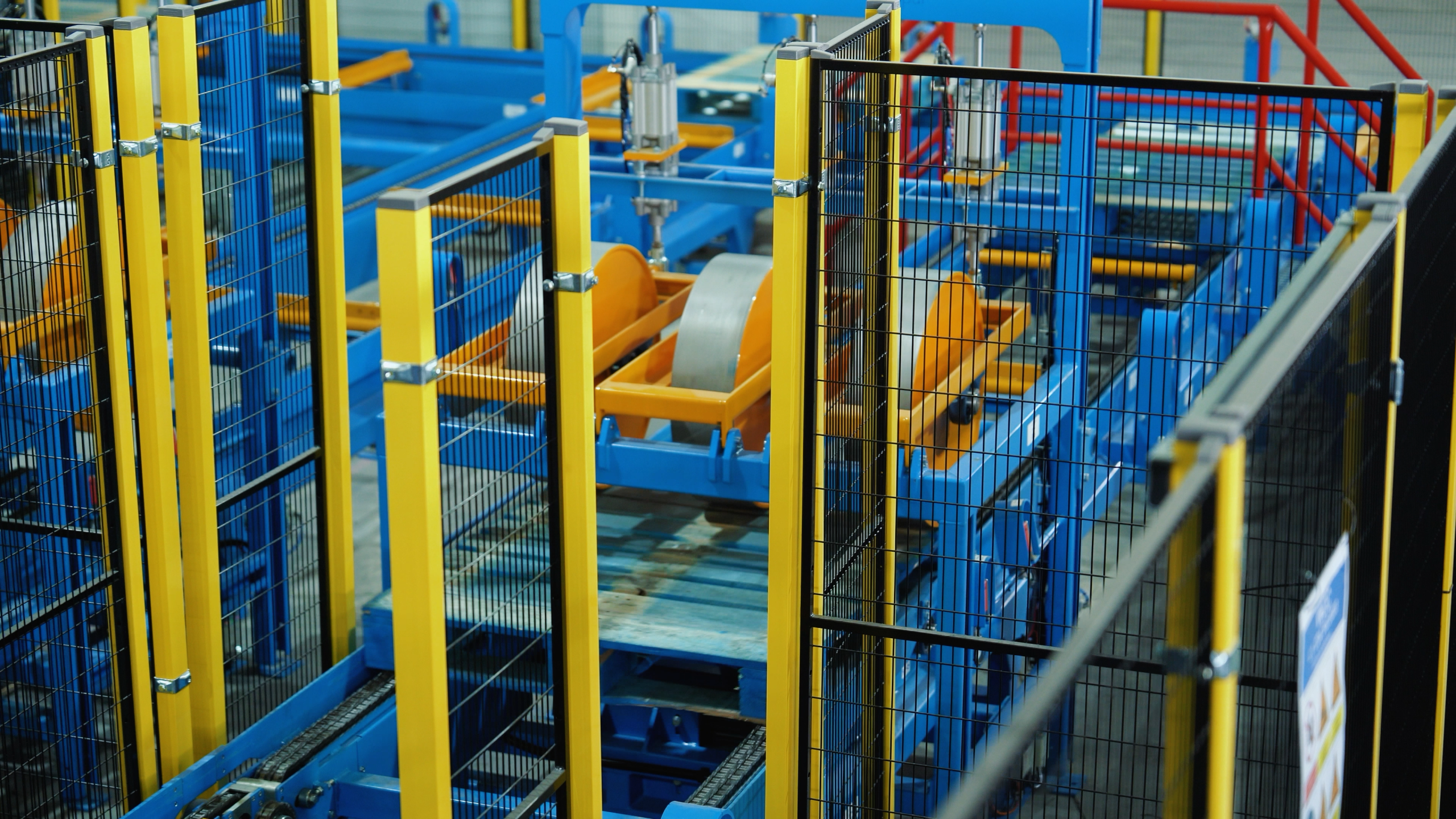
Internal logistics automation has become a key element for industrial companies seeking to improve their operational efficiency and adapt to increasingly demanding environments.
The increase in production, the need to reduce errors and the pressure to optimize costs make manual processes increasingly less sustainable. In this context, automating internal material flows makes it possible to improve the overall performance of the plant and gain growth capacity.
In addition, solutions such as automated warehouse systems make it possible to better organize inventory, optimize available space and facilitate access to materials in real time.
What is internal logistics automation?
Internal logistics automation consists of the application of technologies and systems that allow the automatic management of the movement, storage and control of materials within an industrial facility.
It is not just about replacing manual tasks, but about designing an integrated system where all processes are connected and optimized.
These processes include:
- Transportation of materials between work areas
- Warehouse and location management
- Order preparation
- Production line feeding
- Stock control and traceability
In this context, automated warehouse systems allow inventory to be managed more efficiently, reducing search times, errors and loss of space.
The role of the warehouse in internal logistics
The warehouse is one of the critical points within internal logistics. Poor management can generate delays, errors in production and unnecessary costs.
Warehouse automation allows:
- Reduce unnecessary trips
- Improve stock organization
- Increase the speed of access to materials
- Minimize inventory errors
Automated warehouse systems are designed precisely to solve these problems, allowing more orderly, precise and efficient management of material flow.
Benefits of intralogistics automation
The implementation of internal logistics automation solutions has a direct impact on multiple areas of the company.
Reduction of operating costs
Automation allows us to reduce dependence on manual tasks and minimize errors, which translates into a reduction in operating costs.
It also allows optimizing the use of resources, both human and material.
Productivity improvement
Automated systems allow you to work continuously, reducing interruptions and improving execution times.
This facilitates a more stable and predictable workflow.
Greater control and traceability
One of the great benefits is the ability to have real-time information about the status of the materials.
This allows you to make faster decisions based on reliable data.
Error reduction
Manual processes are often subject to human error, especially in repetitive tasks.
Automation allows you to standardize processes and improve accuracy.
Space optimization
The correct organization of the warehouse, especially through automated warehouse systems, makes it possible to make better use of the available space and increase capacity without the need to expand facilities.
What processes can be automated?
Internal logistics automation can be applied in practically all the internal flows of an industrial company.
Internal transportation of materials
Includes the movement of materials between warehouse, production and shipping.
It can be automated through transportation systems or autonomous vehicles.
Warehouse management
Warehouse automation allows you to control locations, inputs and outputs of material precisely.
Automated warehouse systems facilitate this management, improving efficiency and reducing time.
Order preparation (picking)
Automating picking allows you to reduce errors and improve speed in order preparation.
Production line feeding
Automation ensures that materials arrive at the right time, avoiding production stops.
How to implement internal logistics automation
Implementing an internal logistics automation system requires a structured approach adapted to each company.
1. Analysis of the current situation
It is essential to understand how current processes work, identify inefficiencies and detect opportunities for improvement.
2. Definition of objectives
Each company has different needs: reduce costs, increase capacity, improve times or gain control.
Defining clear objectives is key to designing the right solution.
3. Solution design
The most appropriate technologies and systems are selected based on the environment and needs.
This is where elements such as internal transportation, process automation or warehouse management systems are defined.
4. Integration with existing systems
Automation must be integrated with the company’s management systems to ensure a continuous flow of information.
5. Implementation and validation
The installation, tests and necessary adjustments are carried out to ensure correct operation.
6. Continuous improvement
Once up and running, it is important to analyze performance and continue optimizing processes.
When is it time to automate a warehouse?
There are clear signs that indicate the need to implement automation:
- Increase in errors in warehouse
- Difficulty managing growth
- Inefficient manual processes
- Lack of space
- Coordination problems between areas
Detecting these signs in time allows us to anticipate and avoid major problems.
Intralogistics automation and industrial evolution
Internal logistics automation is part of the natural evolution of the industry towards more efficient and connected environments.
Companies that opt for these systems not only improve their current operations, but also prepare to grow sustainably and adapt to new market demands.
Internal logistics automation allows you to optimize processes, improve efficiency and reduce costs within the company.
Integrating solutions such as automated warehouse systems facilitates inventory management and improves control of internal flows.
This is a strategic investment that directly impacts the competitiveness and growth of the organization.
At iclotet, we help companies design and implement personalized industrial automation solutions, adapted to each process and need. If your company is considering taking the step towards automating industrial processes, contact our team. We will be happy to study your case and help you build a tailored solution for your business.